Written in Chinese, translated by Claude Sonnet 4.5.
The main reason why the development of Escape Everlit has taken far longer than expected is the script writing.
Almost all the art and music assets in the game are AI-generated. Quite a few people have questioned from different angles what kind of reception (including no reception at all) a game made this way would get.
Other than “balancing it out with the reputation that might come from the story,” I don’t have any other good solutions.
Telling an interesting, grounded, structurally elegant sci-fi mystery story that can only be clearly expressed through the interactive medium of games—this was my original intention for starting this project, and it’s been my biggest motivation for stubbornly persisting alone for a year and a half to basically complete the game.
In my view, an indie game doesn’t mean a game made by one person or a few people, but rather “a game that won’t be completely driven by mass appeal because commercial returns override everything.” Having a small team is simply to facilitate this goal. I have a litmus test during development: “If I don’t make this, could someone else make a very similar game (or tell a very similar story)?” If the answer is yes, then there’s no point in continuing.
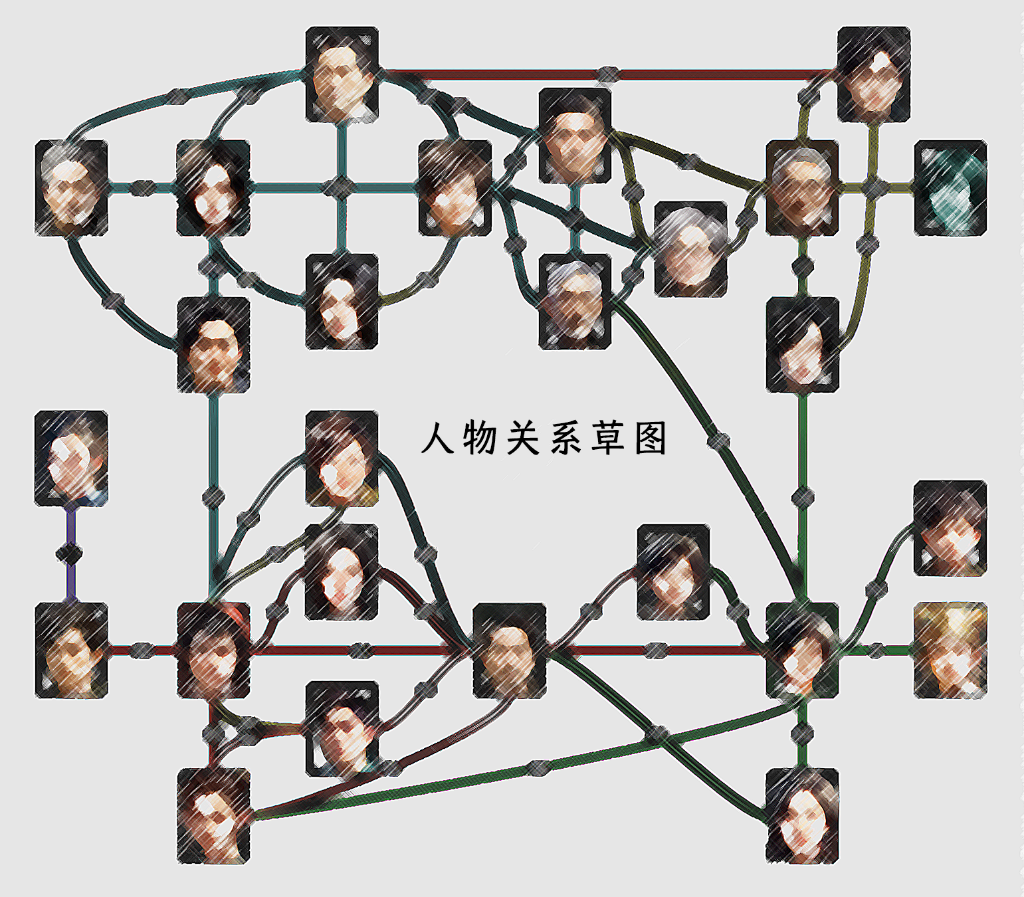
It’s precisely because of this criterion that the script has become the most grueling part of the entire development. My mind constantly needs to think about whether the story is:
- Unique. Plot development avoids clichés, defies stereotypes, reflects the true complexity of situations, and conforms to logic and setting
- Respectful of the intelligence of players/readers and the characters themselves, with each character’s dialogue stemming from their own personality and motivations
- The story’s direction shouldn’t be easily predicted but also shouldn’t deliberately go off the rails; while maintaining balanced narrative pacing, interesting ideas must be deployed at key points
And the requirements for writing game scripts are much higher than simply telling a story:
- The narrative needs to be tightly coupled with interactive mechanics in both directions
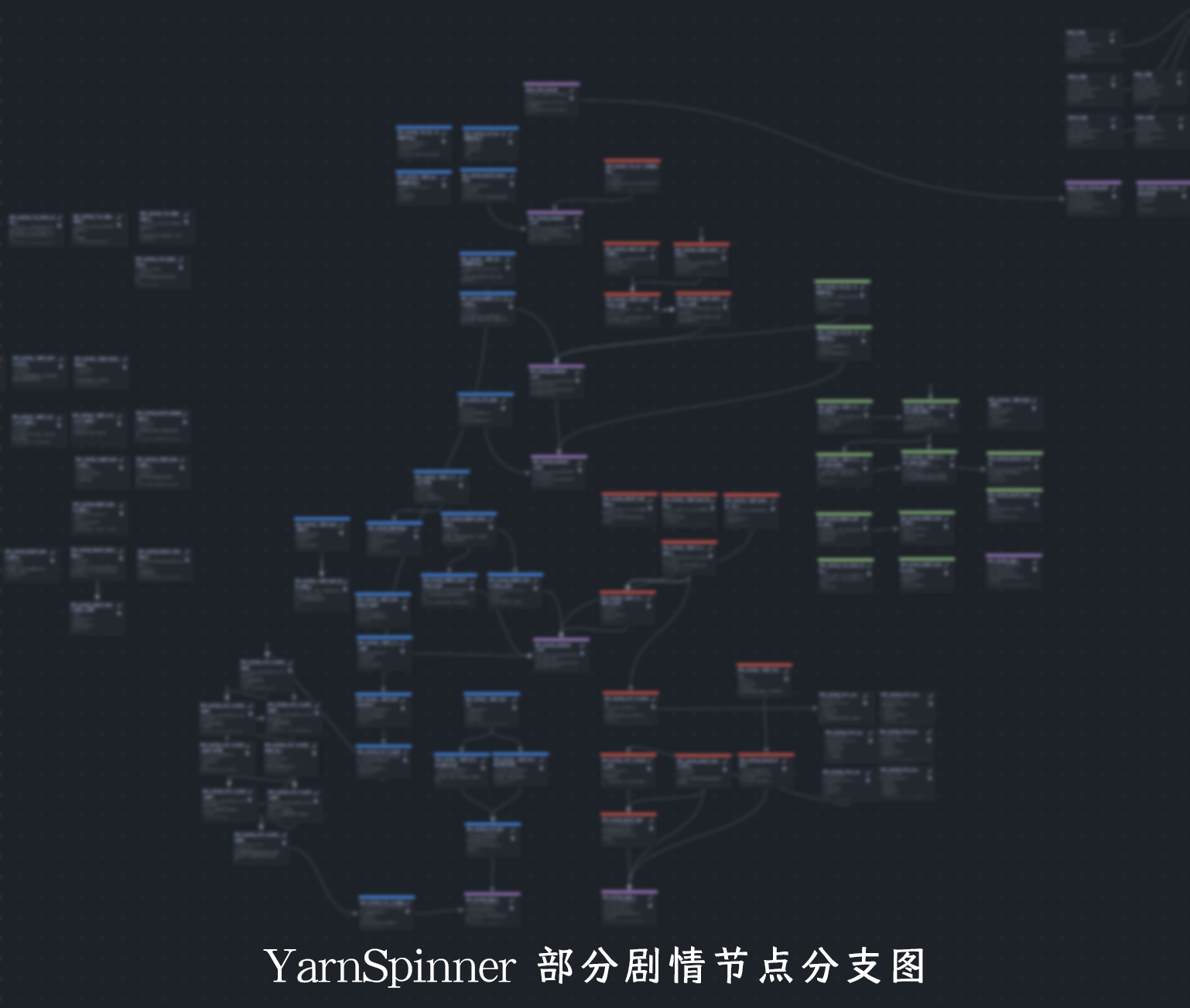
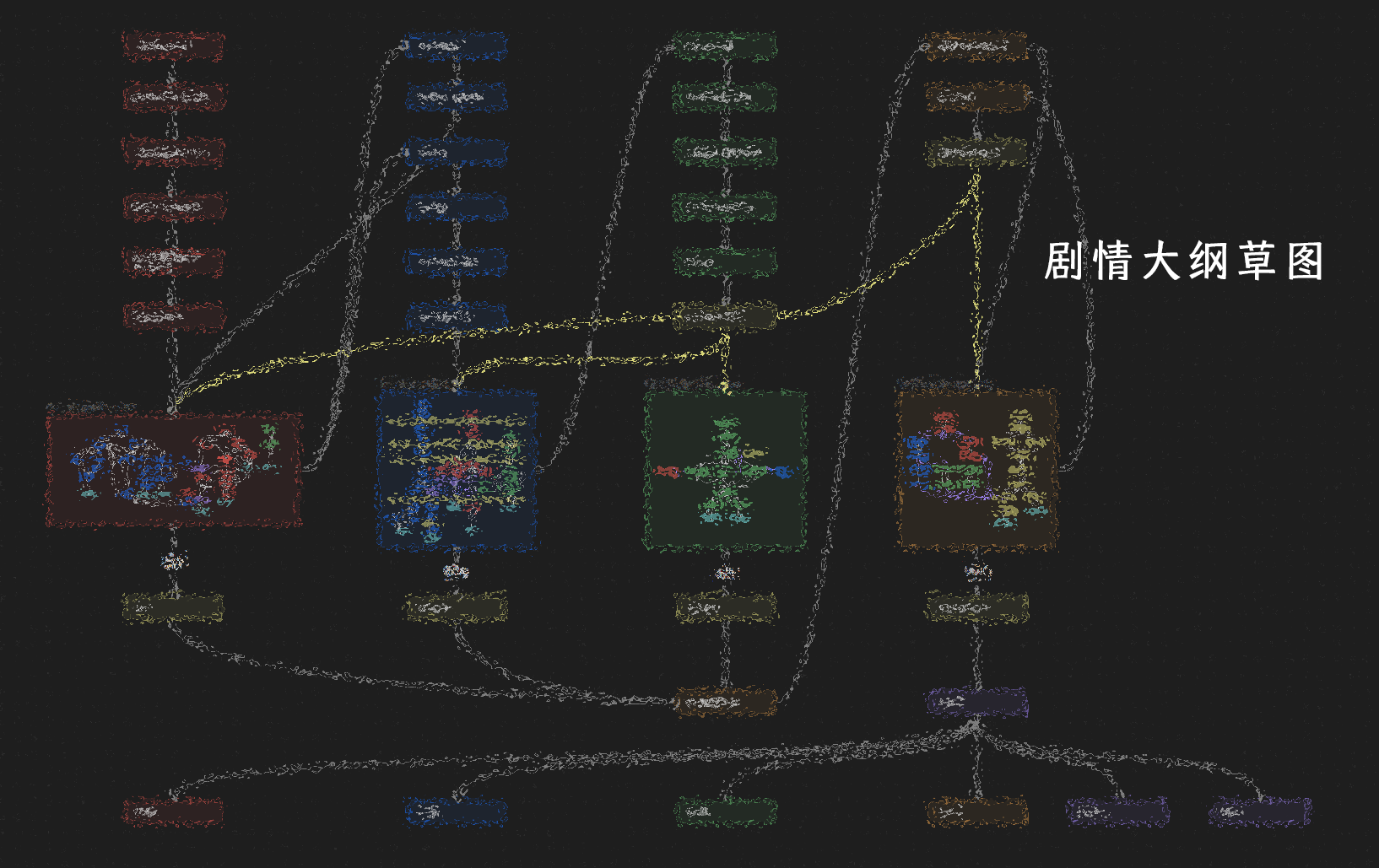
- Try to add impactful branching options to increase player agency, while also controlling workload
- Characters’ personalities, logic, and behaviors must not only be internally consistent under players’ different choices and sequences, but must also present roughly equally compelling developments (otherwise there will be “bad” or “weak” branches)
- Can’t use common literary techniques like summary descriptions, stream of consciousness, or narrative commentary to adjust story pacing and convey emotions (Escape Everlit is a visual novel/text adventure type, but the game only has character dialogue and monologue, basically no descriptive text, mainly relying on 2D scene shots and simple character animations to express context; this isn’t a requirement of game genre itself, just a limitation I set for myself.)
- The narrative plot and text must balance with the game’s audiovisual style—and the audiovisual quality is limited by the reality that I’m a novice developing it alone (if character movements had fluid animations and every line of dialogue had high-quality voice acting, the demands on the narrative tension carried by text would be much lighter).
I’m not saying all of these can be achieved. Rather, these rules need to be highlighted in my subconscious at every moment.
Detailed statistics will come after the game is released, but of the roughly 2,400 hours of development time so far, script/story has taken more than a third, over 800 hours (not counting the time when my brain was numb and crashed when I couldn’t write at all).
Currently, the game has over 10,000 lines of non-repeating dialogue (a “line” is defined as all text displayed in a dialogue box at once). When the final polish is done, it won’t be much different.
For comparison, some “competitors” I’ve written about before:
- Pentiment has 33,000 lines of dialogue, 340,000 words
- Minds Beneath Us has 600,000 chinese characters (mine has 180,000)
By reading this far, you’ve probably already realized something… this might be one of the hardest games to market in history. Not just because of the unmasked AI art (and from someone without an art background learning as they go). It’s that the parts that might be considered highlights are all in the plot—the problem is, this is also a mystery thriller… and narratively it tries to be as restrained and avoid clichés as possible… to be blunt, I really can’t find any gimmicks to talk about.
But anyway, this is work of love by a certain player, made from scratch over a year and a half.